
A full orthopedic instrument catalog covers dozens of distinct categories. For buyers new to the space, here is a working map of the major groups and what distinguishes them.
Holding and clamping
Bone holding forceps and bone holding clamps stabilize fragments during reduction and fixation, in a range of jaw designs — pointed, self-centering, speed-lock — matched to the anatomical site and the fixation method being used.
Cutting
Bone cutting forceps, rongeurs, and wire cutting pliers handle bone shaping, trimming, and wire or pin cutting. These see the most edge wear in a set and are the category where steel grade and finish (see our related articles) matter most.
Drilling and driving
Bone hand drills, drilling chucks, and extension bows create pilot holes and drive fixation hardware. Where a set supports a specific plate/screw system, these need to match that system's sizing exactly.
Shaping
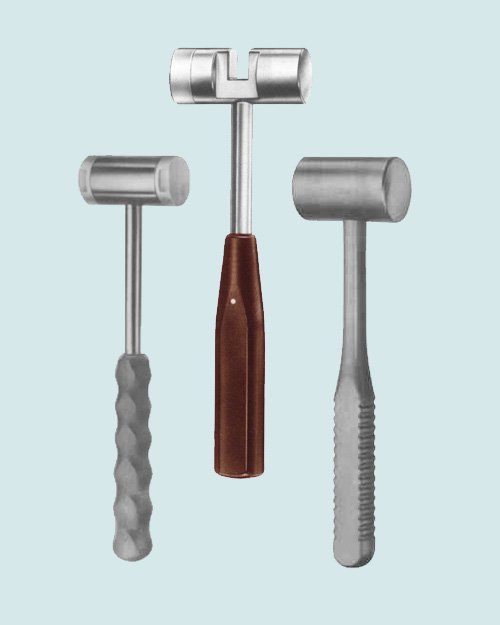
Osteotomes, chisels, gouges, and bone files shape and smooth bone surfaces during a range of orthopedic procedures, typically used with a mallet.
Retraction and exposure
Retractors — general, knee and spinal, and amputation retractors among others — hold the surgical field open. Selection is highly procedure-specific (see our spine instrumentation article for why this matters especially there).
Extraction and removal
Nail extracting forceps and similar instruments are built specifically for hardware removal procedures, distinct from the forceps used during initial fixation.
Wire and tendon handling
Wire twisting forceps, tendon strippers, and tendon forceps handle the finer wire and soft-tissue work that runs alongside bone work in many orthopedic procedures.
Using this map
When you are building or reviewing a set, this category structure is a useful way to check completeness — holding, cutting, drilling, shaping, retraction, and extraction — rather than working from a flat instrument list where it is easy to miss a category entirely.