
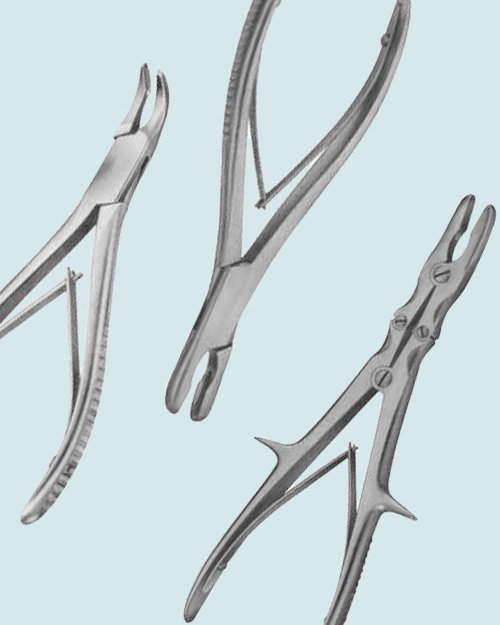
Finish is one of the details a quotation should specify explicitly, because the same pattern in the same steel grade can be finished several different ways — and the choice affects more than appearance.
Mirror (highly polished) finish
A mirror finish gives instruments a bright, reflective surface. It looks premium and is straightforward to inspect visually for surface defects, but it can produce glare under strong surgical lighting, which is why some surgical teams prefer a duller finish for instruments used close to the operative field.
Satin finish
Satin finishing produces a low-glare, brushed surface that remains easy to clean and inspect while reducing reflectivity compared to a full mirror polish. It is a common middle-ground choice for general instrument sets where glare reduction matters but a fully matte surface is not required.
Matte / sand-blasted finish
A matte or bead/sand-blasted finish minimizes glare almost entirely and is often specified for instruments used directly under intense surgical lighting, or where a buyer's end market has a strong preference for a non-reflective surface. It requires careful process control during blasting to maintain consistent surface texture across a full order.
Finish and corrosion resistance
Surface finish interacts with passivation quality — a properly passivated surface, regardless of mirror, satin, or matte finish, forms a stable chromium oxide layer that resists corrosion through repeated sterilization cycles. Finish type does not replace correct passivation; both need to be right.
Specifying finish on a quotation
If you have a finish preference — whether matching an existing instrument set, or based on your surgical team's stated preference — specify it explicitly when you send an enquiry rather than leaving it to default. Different finishes can also carry slightly different processing time, which is worth factoring into your lead time expectations.